If you searched for “free medicare,” the short answer is that some Medicare coverage can have a $0 monthly premium, but Medicare generally is not free. You may still pay premiums for other coverage, deductibles before benefits begin and copays or coinsurance when you receive care.
The biggest source of confusion is the difference between premium-free Medicare Part A and a $0-premium Medicare Advantage plan. Neither automatically eliminates your other expenses. Understanding that distinction helps you estimate what coverage will actually cost, rather than choosing a plan based only on its advertised price.
A $0 premium is not the same as $0 healthcare costs
A premium is the recurring amount you pay to maintain coverage. A deductible is an amount you pay for certain covered services before insurance starts paying its share. Copays and coinsurance are costs you pay when using covered services.
A plan can charge no additional monthly premium while still requiring payment for a specialist appointment, hospital stay or prescription. You can also owe a separate Medicare Part B premium even when your Medicare Advantage plan advertises a $0 premium.
The practical question is not simply whether coverage is free. It is how much you would pay during a typical year and how much financial exposure you would have if you needed substantial treatment.
Why “free medicare” usually means premium-free Part A
Medicare Part A helps cover inpatient hospital care, qualifying skilled nursing facility care, hospice and certain home health services. Most people do not pay a Part A premium because they or a qualifying spouse paid Medicare taxes long enough, generally at least 10 years.
That work history usually removes the monthly Part A premium, not the costs of receiving care. Hospital deductibles and other cost-sharing can still apply.
People who do not qualify for premium-free Part A may be able to buy it if they meet Medicare’s eligibility requirements. In 2026, the monthly premium is either $311 or $565, depending on qualifying Medicare-taxed work history. Age 65 alone does not guarantee premium-free coverage.
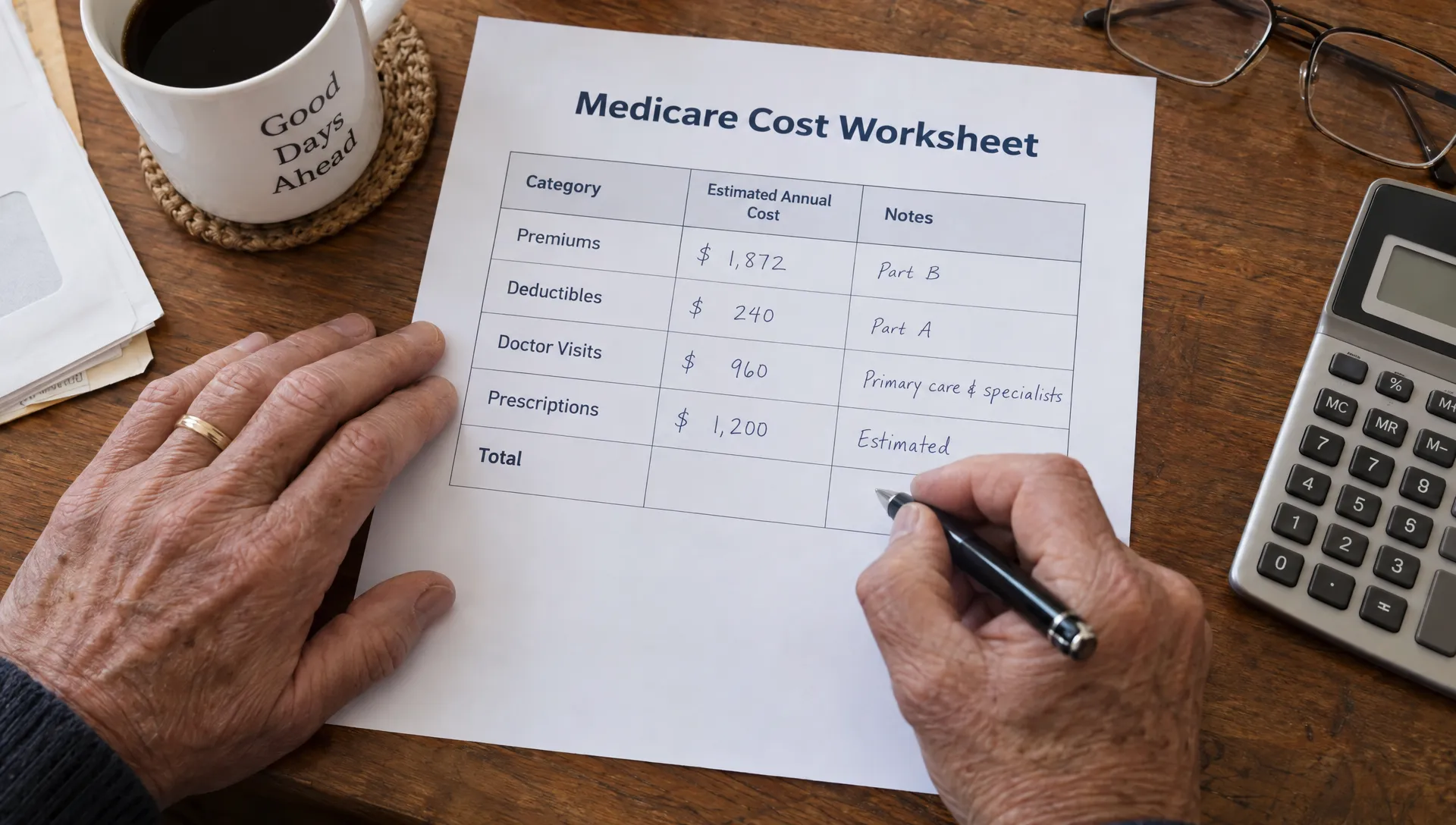
Medicare costs you may still pay in 2026
The following figures come from Medicare’s official cost information. They apply to 2026, so check updated figures before budgeting for another year.
These charges explain why an advertisement for “free medicare” should never be treated as a complete estimate of your healthcare expenses.
| Coverage or expense | 2026 cost or rule | What it means for your budget |
|---|---|---|
| Part A hospital deductible | $1,736 per benefit period | You could owe it more than once in a year |
| Standard Part B premium | $202.90 per month | Most beneficiaries pay this even with Medicare Advantage |
| Part B deductible | $283 per year | Applies before payment for many covered outpatient services |
| Original Medicare Part B coinsurance | Usually 20% of the Medicare-approved amount after the deductible | Some preventive services have different cost rules |
| Part D drug coverage | Premium varies by plan; deductible cannot exceed $615 | Check your specific plan and prescriptions |
| Part D out-of-pocket limit | $2,100 for covered Part D drugs | Premiums and drugs not covered by Part D do not count toward this limit |
A Part A benefit period is not the same as a calendar year. It begins when you enter a hospital or skilled nursing facility as an inpatient and ends after 60 consecutive days without inpatient hospital care or skilled nursing facility care.
Higher-income beneficiaries can also pay an income-related monthly adjustment amount, or IRMAA, for Part B and Part D. Medicare generally uses tax information from two years earlier to determine that adjustment.
How $0-premium Medicare Advantage plans work
A $0-premium Medicare Advantage plan is not the same as “free medicare.” It means the private plan charges no additional plan premium. You generally must still maintain Part A and Part B and pay the Part B premium, unless assistance covers it.
Medicare Advantage, also called Part C, provides your Medicare-covered benefits through a private insurer. Many plans include prescription coverage, but costs and availability depend on the plan and your location.
A $0-premium plan may still charge for doctor visits, emergency care, hospital stays and prescriptions. Provider networks and prior authorization requirements can also affect how you access care.
Unlike Original Medicare, Medicare Advantage has an annual out-of-pocket limit for covered Part A and Part B services. That limit does not include premiums or Part D prescription expenses. Check whether a plan has separate in-network and combined in-network/out-of-network limits.
Some plans offer a Part B premium reduction. That benefit can lower your premium expense, but it does not eliminate every healthcare bill.
Expenses that a premium advertisement may leave out
Original Medicare has no annual out-of-pocket maximum for covered Part A and Part B services. Without supplemental coverage, ongoing coinsurance can create significant expenses during a year with extensive treatment.
Medigap policies can help pay certain Original Medicare cost-sharing, but they usually have their own monthly premiums. They do not replace Medicare or work as supplements to Medicare Advantage. If the terminology is confusing, understanding how Medigap Plan A differs from Medicare Part A helps separate hospital coverage from supplemental insurance.
Original Medicare also generally excludes routine dental care, routine vision exams for glasses, hearing aids and long-term custodial care. A Medicare Advantage plan may provide some additional benefits, subject to its terms and limits.
Even when someone describes coverage as “free medicare,” you still need to identify which services are covered, which expenses remain your responsibility and whether supplemental coverage has an additional premium.
A simple example of what you could owe
Consider someone enrolled in Original Medicare for all of 2026 who qualifies for premium-free Part A and pays the standard Part B premium.
Their Part B premiums alone total $2,434.80 for the year: $202.90 multiplied by 12 months. That expense exists even if they never need deductible-applicable care.
Now assume they receive $2,000 in Medicare-approved outpatient services, all subject to the Part B deductible and standard 20% coinsurance. Their providers accept Medicare assignment, and they have no supplemental coverage.
They would pay the $283 deductible, plus 20% of the remaining $1,717, or $343.40. Their share of those services would total $626.40, bringing premiums plus those outpatient expenses to $3,061.20.
This is an illustration, not a quote. It excludes prescriptions, hospital care and noncovered services. It shows why a monthly premium alone cannot tell you the full cost of coverage.
Programs that can reduce Medicare expenses
For some beneficiaries, financial assistance can bring costs closer to what they hoped “free medicare” would mean. Eligibility depends on the program, income and sometimes resources, with important differences between states.
Medicare Savings Programs
State-run Medicare Savings Programs can help eligible people pay Medicare premiums. Depending on the program, assistance may also cover deductibles, coinsurance and copays.
The Qualified Medicare Beneficiary program, or QMB, provides particularly broad help. Providers cannot bill QMB beneficiaries for Medicare-covered Part A and Part B deductibles, coinsurance or copays. This protection applies even if the provider does not accept Medicaid.
Do not assume you are ineligible based on someone else’s experience. States can use different eligibility rules, and some have more generous income or resource policies.
Extra Help and Medicaid
Extra Help assists eligible beneficiaries with Part D prescription costs. Depending on the coverage selected and program rules, it can reduce premiums, deductibles and prescription copays. It does not make every medication free or pay your Part B medical bills.
Some people qualify for both Medicare and Medicaid. Medicaid may help with expenses Medicare leaves behind, but eligibility and covered services vary by state. Ask your state Medicaid agency or a benefits counselor which programs fit your situation.
Avoid penalties that can make coverage more expensive
Searching for “free medicare” should not distract you from enrollment deadlines. Delaying coverage without a qualifying reason can create lasting additional costs.
For Part B, the late-enrollment penalty is generally an additional 10% of the standard premium for each full 12-month period you could have enrolled but did not. You typically pay that penalty for as long as you have Part B.
For Part D, a penalty can apply if you go 63 consecutive days or more without Part D or other creditable prescription coverage after your initial enrollment period. Creditable coverage means prescription insurance expected to pay, on average, at least as much as Medicare’s standard drug coverage.
Working after 65 does not automatically protect you
Employment-based group coverage can support delaying Part B, but the coverage arrangement and employer size matter. Marketplace coverage, COBRA and retiree coverage generally do not provide the same Part B enrollment protections as coverage based on current employment.
For example, a self-employed clothing-business owner sourcing custom woven labels and patches may continue working after 65 while relying on an individual health policy. Operating a business does not turn that individual policy into qualifying employer group coverage.
Before delaying Medicare, confirm your situation with Social Security and your benefits administrator, if applicable. For prescription coverage, keep any creditable coverage notices you receive.
Compare total yearly costs, not just the premium
Start with your actual needs: your doctors, preferred hospital, prescription list and expected appointments. Then compare the recurring premiums and the amounts you would pay when using each coverage option.
For a $0-premium Medicare Advantage plan, review medical copays, the provider network, drug coverage and the annual medical out-of-pocket limit. For Original Medicare, account for Part B, any Part D premium and any Medigap premium, along with remaining cost-sharing.
A useful comparison includes both a routine year and a year with substantial medical needs. The lowest-premium option may not be the least expensive in either scenario.
Rather than accepting “free medicare” as a complete description, ask for a breakdown of costs and coverage restrictions. Knowing what Medicare quotes include and what they leave out can help you ask more precise questions before enrolling.
Frequently asked questions
Is Medicare free when you turn 65? Not generally. Many people qualify for premium-free Part A, but Part B usually has a monthly premium. Deductibles, coinsurance, prescription expenses and other coverage premiums may also apply.
Does a $0 Medicare Advantage premium replace the Part B premium? No. You generally must continue paying your Part B premium. A plan’s Part B premium reduction or financial assistance may lower what you pay, but you should verify the details.
Can low-income beneficiaries get Medicare at little or no cost? Some qualify for Medicare Savings Programs, Extra Help or Medicaid that substantially reduce expenses. These programs have different eligibility and coverage rules, so confirm exactly which costs they pay.
Does Medicare cover every service once I meet my deductible? No. Coinsurance can still apply, and meeting a deductible does not make an excluded service covered. Original Medicare also lacks an annual limit on Part A and Part B out-of-pocket costs.
Get help understanding your Medicare costs
Insurance 2ALL offers free, no-commitment Medicare quotes and licensed advisor guidance, with bilingual support and enrollment application assistance. Bring your prescription list, preferred providers and current coverage details so you can compare options based on your likely expenses, not just an advertised $0 premium.