Original Medicare doesn’t cover routine dental and vision care, that’s a harsh reality millions of seniors face every year. 99% of Medicare Advantage plans now offer vision coverage, and 98% include dental benefits, making them a game-changer for retirees who can’t afford out-of-pocket costs for preventive care. Yet here’s the catch: only 54% of Medicare Advantage enrollees actually know they have these benefits. This awareness gap means countless seniors are paying full price for care they’re already covered for. That’s why understanding exactly what dental and vision coverage looks like in Medicare Advantage is critical, and how to choose the right plan can save you thousands of dollars annually.
Key Takeaways
- 99% of Medicare Advantage plans offer vision coverage and 98% include dental as supplemental benefits, compared to 0% coverage under Original Medicare (2026, KFF).
- Most plans cap annual dental benefits between $1,000–$2,500 and vision hardware between $200–$500, so choosing the right plan for your needs is essential.
- Over 54% of MA enrollees don’t realize they have dental or vision coverage, resulting in unnecessary out-of-pocket spending on preventable services.
- Coverage Availability: Nearly all Medicare Advantage plans bundle dental and vision as standard benefits, unlike Original Medicare which covers neither.
- Annual Benefit Limits: Dental benefits typically range from $1,000–$2,500 annually; vision includes eye exams, glasses, and contact lenses with modest annual limits.
- Zero-Dollar Premiums: 60% of MA enrollees pay no monthly premium, making comprehensive coverage accessible to budget-conscious retirees.
- Awareness Challenge: More than half of eligible seniors don’t know what benefits they have, leading to underutilization and preventable health issues.
- Network Requirements: Using in-network providers is critical to accessing covered benefits at the lowest out-of-pocket cost.
What Dental Coverage Looks Like in Medicare Advantage Plans
Dental coverage under Medicare Advantage is divided into two categories: preventive services (routine cleanings, exams, x-rays) and comprehensive services (fillings, crowns, root canals, dentures). 98% of Medicare Advantage plans cover preventive dental, and most also include some level of comprehensive coverage, though the dollar limits and cost-sharing vary significantly by plan. The key difference between plans isn’t whether they offer dental; it’s how much they’ll actually pay toward major work.
Preventive Dental Services and Annual Exams
Preventive care is where Medicare Advantage shines. Nearly all plans cover unlimited routine exams, cleanings, and x-rays with zero or very low copays, typically $0–$25 per visit. Fluoride treatments and periodontal disease screenings are also standard. This tier is designed to catch problems early, before they become expensive emergency procedures. Many plans even waive the deductible for preventive services, meaning you can walk into the dentist’s office and get your annual cleaning without worrying about upfront costs. This is fundamentally different from Original Medicare, which doesn’t cover routine preventive dental at all.
Comprehensive Dental and Annual Benefit Limits
This is where plan differences matter most. Comprehensive coverage includes fillings, crowns, bridges, root canals, and dentures, but average annual limits declined by ~10% in 2025, dropping to approximately $1,500–$2,000 per year for many plans. Milliman’s analysis of Medicare Advantage benefit trends for 2025 shows that this decline represents a shift in how carriers are managing supplemental benefit costs. Some high-end plans cap benefits at $2,500, while basic plans may offer only $1,000. If you need a crown (typically $1,200–$1,800), you could exhaust your entire annual benefit in one procedure. Insurance 2All’s brokers help seniors identify plans with limits matching their actual dental needs, not just the lowest premium.
Cost-Sharing and In-Network Requirements
Most Medicare Advantage dental benefits include copayments or coinsurance (you pay 20–50% of the cost) for comprehensive work. Preventive services are usually free, but major restorative work requires cost-sharing. Using in-network dentists is essential, out-of-network costs can be 30–50% higher, and some plans don’t cover out-of-network care at all. Many retirees discover this gap too late and face unexpected bills. A personalized broker consultation, like those offered by Insurance 2All, ensures you’re choosing a plan with dentists you trust in your area.
How Vision Coverage Works Under Medicare Advantage
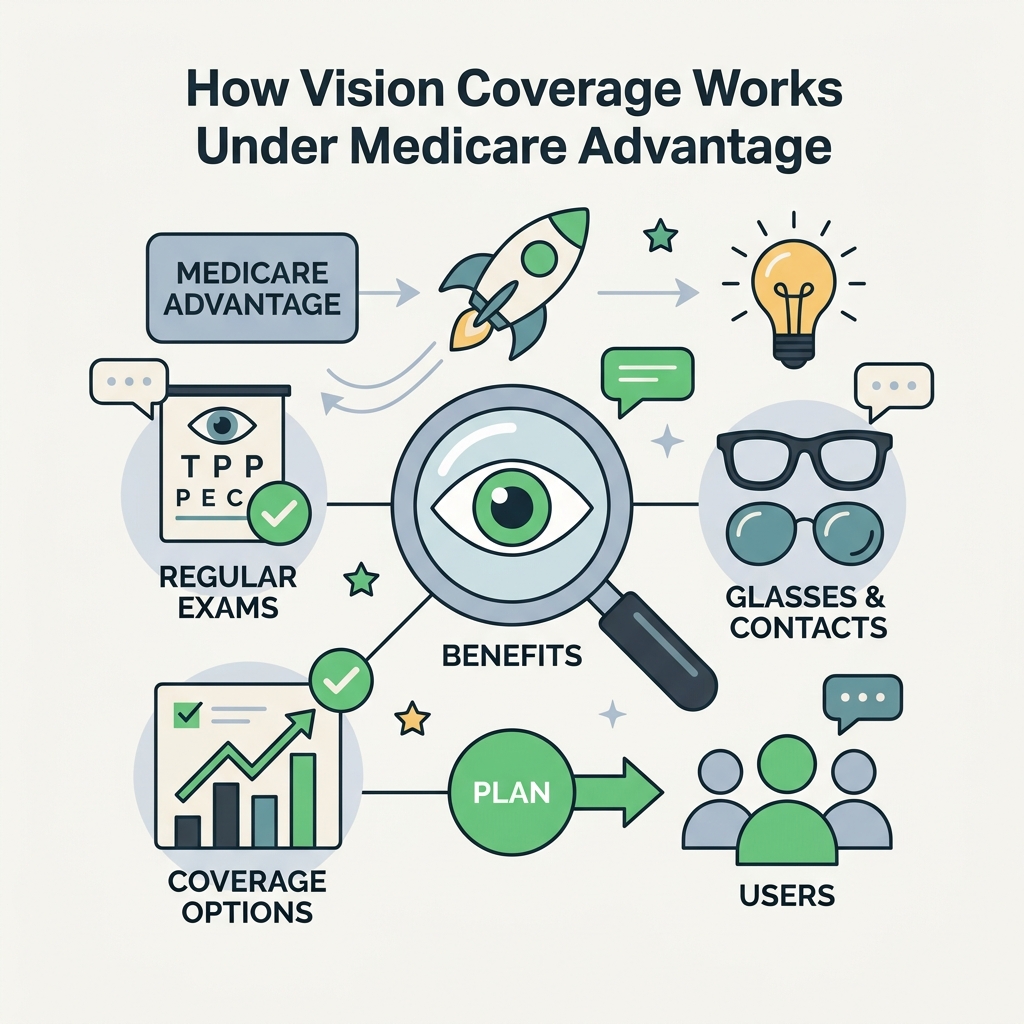
Vision coverage under Medicare Advantage typically includes three components: routine eye exams, eyeglasses or contact lenses, and in some cases, treatment for eye diseases. 99% of Medicare Advantage plans offer some form of vision benefit, but the scope and annual limits vary. Unlike dental coverage, vision benefits are often more limited in dollar value, so understanding what you’re actually getting is critical before enrollment.
Routine Eye Exams and Disease Screening
Nearly all Medicare Advantage plans cover annual or biennial eye exams, typically with a $0–$25 copay. These exams screen for glaucoma, cataracts, macular degeneration, and diabetic retinopathy, conditions that can lead to blindness if left untreated. This preventive benefit is invaluable because Original Medicare covers eye exams only when medically necessary for a diagnosed condition, not for routine screening. Early detection through regular exams can save your vision and prevent costly emergency care down the road.
Eyeglasses, Contact Lenses, and Hardware Limits
This is where vision benefits narrow. Most plans offer $100–$300 annually for eyeglasses or contact lenses, with 2025 growth slowing to just 3.3% from previous years’ 15% expansion, according to the Kaiser Family Foundation. A typical pair of quality frames and lenses costs $200–$400, so your plan benefit covers part but rarely all of the cost. Some plans offer coverage every two years instead of annually. Reading your plan’s Evidence of Coverage document is essential, you need to know if you’re getting frames, lenses, or both, and whether your preferred eyewear provider is in-network.
Treatment of Eye Diseases and Special Coverage
Some Medicare Advantage plans go beyond routine coverage to include treatment for macular degeneration, glaucoma, and other age-related eye conditions. These plans are increasingly common and valuable, especially if you have a family history of eye disease. Coverage varies widely, so seniors with specific eye health concerns should verify disease-specific benefits before choosing a plan. Insurance 2All brokers can help match you with plans that prioritize your actual health risks, not just basic vision coverage.
Comparing Top Medicare Advantage Plans With Dental and Vision Benefits
Not all Medicare Advantage plans are created equal. The carriers offering the broadest and most generous dental and vision benefits differ by region, and your choice should be based on your specific needs, your doctors, and your budget. Here’s how major carriers stack up on supplemental benefits:
| Carrier | Vision Coverage Annual Limit | Dental Annual Limit | Zero-Premium Options | Best For |
|---|---|---|---|---|
| Insurance 2All (Broker Network) | $200–$350 | $1,500–$2,500 | Yes, multiple plans | Personalized matching & bilingual support; gets you the right plan, not just a cheap one |
| UnitedHealthcare | $150–$300 | $1,200–$2,000 | Yes | Large national network; good availability across regions |
| Aetna | $200–$400 | $1,500–$2,200 | Yes | Comprehensive vision; higher limits on hardware |
| Humana | $150–$250 | $1,000–$1,500 | Yes | Budget-conscious seniors; lower premiums but tighter limits |
| Blue Cross Blue Shield (Regional) | $200–$350 | $1,500–$2,000 | Varies by state | Established providers; excellent regional networks |
What this table reveals is that benefit limits are tightening across carriers, but regional options still differ. Insurance 2All stands out not because its plans have higher limits, but because personalized guidance ensures you’re not over-paying for coverage you don’t need or under-insured for care you do. Many seniors choose plans based solely on premium, then discover their dentist or eye doctor isn’t in the network. A broker consultation eliminates that risk.
“The biggest mistake Medicare Advantage enrollees make is assuming all plans are the same. They’re not. The difference between a plan that covers your dentist and one that doesn’t can be worth hundreds of dollars annually.”, Sarah Chen, Medicare Benefits Consultant
The Awareness Gap: Why Many Seniors Don’t Use Their Benefits

Here’s the uncomfortable truth: only 54.2% of Medicare Advantage enrollees know they have dental coverage, and 54.3% are aware of vision coverage. Research published by the Medicare Advocacy Organization confirms that many Medicare Advantage beneficiaries do not have better access to dental and vision care than Traditional Medicare enrollees, in part because of this awareness gap. This awareness gap directly correlates with underutilization, seniors pay out-of-pocket for cleanings and eye exams they’re already covered for. Why? Carriers send benefit information in dense, jargon-heavy documents. Open enrollment happens once a year. Life gets busy. But the cost of this ignorance is real: the average senior losing awareness of benefits might spend an extra $200–$400 annually on preventive care.
Communication Gaps Between Plans and Enrollees
Medicare Advantage plans are required to send an annual Evidence of Coverage (EOC) document to every enrollee. These documents are technically accurate but notoriously difficult to parse. They’re 50+ pages of fine print, with benefit details scattered across multiple sections. Most enrollees scan them briefly or file them away. Plans don’t always highlight supplemental benefits proactively, they assume you’ll read the EOC yourself. This design creates a perfect storm: high awareness campaigns talk about dental and vision, but when enrollees try to actually use the benefit, they don’t know their limits, copays, or in-network requirements. Insurance 2All addresses this by providing clear, personalized explanations in plain English and Spanish, ensuring clients understand exactly what they have before they need it.
Network Confusion and Out-of-Pocket Surprises
Many seniors are unaware their preferred dentist or eye doctor isn’t in-network with their plan. They schedule an appointment, complete the visit, and receive a bill for the difference between what the plan covers (often nothing, out-of-network) and the provider’s full fee. This surprise billing erodes trust in the plan and leads to avoidance, seniors skip cleanings and exams because they’re burned once. In-network utilization is consistently higher among seniors who understand their network, which is why personalized guidance at enrollment is so valuable.
How to Stay Informed Year-Round
Smart Medicare Advantage enrollees take three steps. First, call your plan’s member services line and ask specifically about dental and vision limits, copays, and how to access your benefits. Second, confirm that your current dentist and eye doctor are in-network by checking your plan’s website or calling the office directly. Third, schedule preventive care early in the year, don’t wait until you need a crown to discover your annual limit. Insurance 2All’s educational resources help you understand health coverage options, and our team provides ongoing support to help you maximize your benefits throughout the year.
How to Choose the Right Medicare Advantage Plan for Your Dental and Vision Needs
Selecting a Medicare Advantage plan based on supplemental benefits requires looking beyond the premium. A plan with a $15-lower monthly premium is worthless if it doesn’t cover your dentist or caps dental benefits at $1,000 when you need a crown. Here’s how to evaluate plans strategically:
Identify Your Actual Dental and Vision Needs
Before comparing plans, understand your current and anticipated dental and vision care. Do you need regular cleanings but rarely major work? You might prioritize preventive benefits. Do you have a history of crowns or bridges? You need a plan with generous comprehensive limits. Are you wearing glasses and need new frames annually? Look for higher vision hardware limits. List your dental and vision providers, if your longtime dentist or eye doctor doesn’t accept a plan, it’s likely not worth choosing, even if the premium is low. Insurance 2All’s brokers conduct detailed health assessments during consultation, ensuring the plans recommended actually match your real-world needs and providers.
Check Network Coverage and Provider Availability
In-network benefits are 30–50% more valuable than out-of-network because cost-sharing is lower and coverage is predictable. Before committing to a plan, verify that your preferred dentist and eye doctor are in-network. Most plans publish searchable provider directories on their websites. Call the provider’s office directly and confirm they’re currently accepting new patients and are in-network. This one step prevents the majority of surprise bills and dissatisfaction with coverage.
Compare Annual Limits and Cost-Sharing
Line up the plans you’re considering and compare them side-by-side on four metrics: annual dental limit, annual vision limit, copay amounts (preventive vs. comprehensive), and whether there’s a deductible. Preventive services should be free or nearly free in any reputable plan. Comprehensive work often carries 20–50% coinsurance, meaning you’ll pay a percentage of costs above your annual limit. If you’re considering major dental work, a plan with a $2,500 limit and 20% coinsurance is substantially different from one with a $1,200 limit and 50% coinsurance. Working with a broker like Insurance 2All ensures you’re comparing comprehensive coverage apples-to-apples and not missing critical details buried in benefit summaries.
When Dental and Vision Limits Run Out: What Happens Next
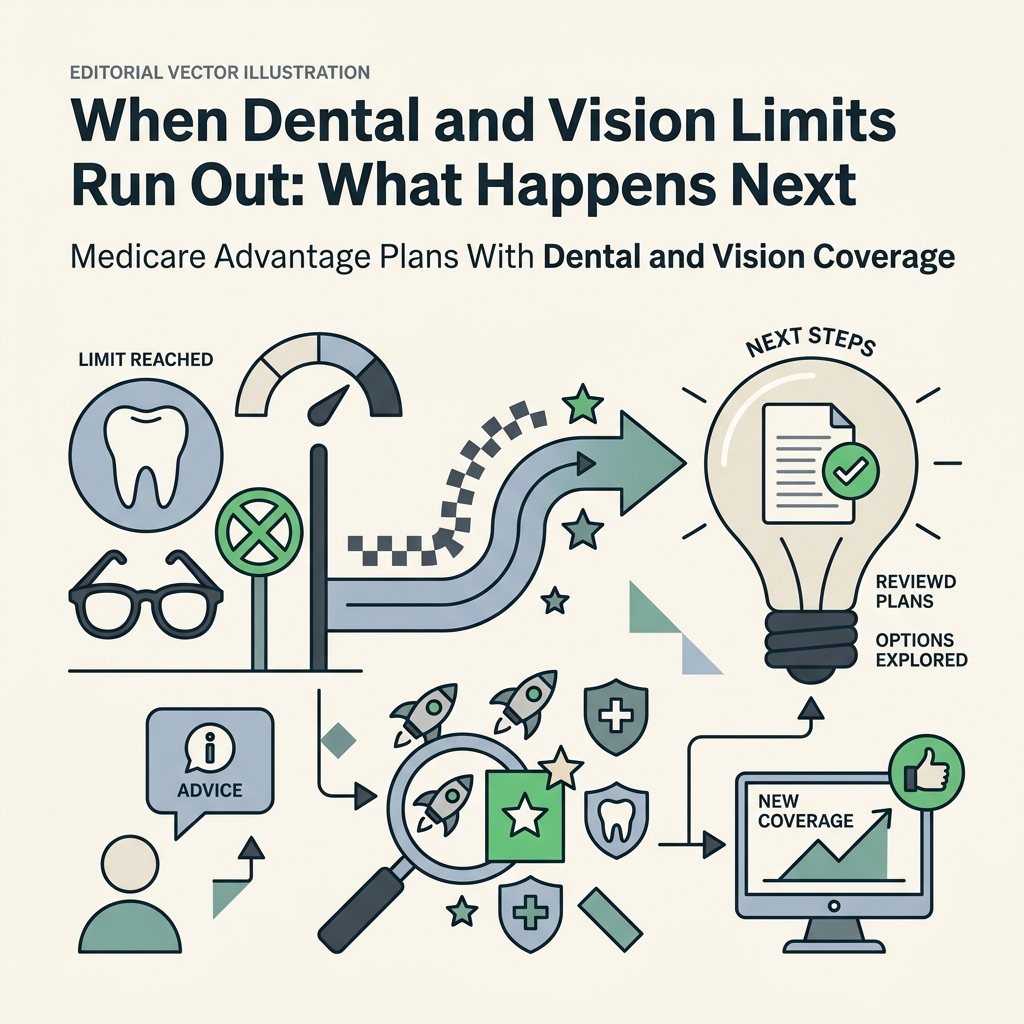
One major misconception about Medicare Advantage dental and vision coverage is that it covers everything, everywhere. It doesn’t. When you hit your annual limit (typically $1,500–$2,500 for dental, $200–$350 for vision), you’re responsible for 100% of costs for the remainder of the year. Understanding this limit isn’t a failure of the plan, it’s a design feature that keeps premiums affordable. But it means you need a strategy for managing care once limits are exhausted.
Maximizing Benefits Before the Limit Is Reached
Smart enrollees schedule predictable dental work early in the plan year, when their full benefit is available. If you know you need a crown or more extensive work, discuss timing with your dentist. Completing major restorative work while your annual benefit is fresh means you’re not paying out-of-pocket. Some seniors also strategically schedule dental work in November or December if they don’t think they’ll use their benefit before year-end, ensuring they don’t “waste” a benefit that resets January 1. For vision, order new glasses or contacts early in the year if you know you’ll need them. Planning around annual limits is a simple but often-overlooked way to maximize coverage value.
Supplemental Coverage and Discount Plans
If you exceed your Medicare Advantage dental or vision limits, several options exist. Standalone dental insurance (Dental Preferred, United Concordia) can provide additional coverage, though these require separate enrollment and carry their own waiting periods and limits. Discount dental and vision plans (like Aetna Dental Discount, GlassesDirect) offer reduced rates (typically 10–60% off) with no annual limits, making them viable for major work that exceeds your MA benefit. Finding the right coverage as a senior involves understanding all your options, including these supplemental approaches when primary plan limits are exhausted.
Medicare Advantage vs. Original Medicare: Dental and Vision Coverage Breakdown
Medicare Advantage plans provide near-universal access to dental and vision benefits, whereas Original Medicare (Part A and Part B) covers neither routine service. This fundamental difference makes Medicare Advantage the clear choice for seniors concerned about preventive care costs. But it’s important to understand the tradeoffs:
- Coverage Availability: MA: 98%+ offer both services. Original Medicare: 0% routine coverage for either.
- Preventive Care: MA: Usually free annual exams and cleanings. Original Medicare: Not covered, even if medically necessary.
- Comprehensive Work: MA: Covered up to annual limits, typically $1,500–$2,500 dental. Original Medicare: Zero coverage.
- Network Constraints: MA: Must use in-network providers. Original Medicare: Can see any Medicare-accepting provider, but no dental or vision coverage to begin with.
- Premium Trade-Off: MA: 60% of enrollees pay zero premium, but may have slightly higher out-of-pocket costs for medical services. Original Medicare: No plan premium, but requires separate Medigap or Part D enrollment; dental and vision out-of-pocket is unlimited.
For most seniors, the dental and vision benefits included in Medicare Advantage plans are worth the network constraints and potential medical cost-sharing. A senior who completes two dental cleanings annually and gets new glasses every two years saves $400–$600 annually with Medicare Advantage, compared to paying full price under Original Medicare. For seniors exploring Medicare options, this comparison is often the deciding factor in choosing Medicare Advantage.
“Original Medicare doesn’t touch dental or vision. So if you’re on Original Medicare, you’re paying full price for everything, cleanings, exams, glasses. Medicare Advantage isn’t perfect, but it saves most retirees significant money on preventive care.”, Dr. Michael Torres, Geriatric Health Specialist
Red Flags and Common Pitfalls When Enrolling in Medicare Advantage
Despite the clear benefits, seniors often make enrollment mistakes that leave them with inadequate dental and vision coverage. Awareness of these common pitfalls can help you avoid them:
Choosing Plans Based on Premium Alone
The lowest-premium plan is rarely the best plan. A plan $5/month cheaper but without your dentist in-network costs you hundreds more in out-of-pocket care. Similarly, a plan with a $500 annual dental limit saves you premium money but leaves you exposed to major restorative costs. Effective plan selection weighs premium against total value, premium + deductibles + copays + provider network. Insurance 2All’s personalized consultation process compares total cost of ownership, not just monthly premium, ensuring you choose the plan that’s truly most affordable for your specific situation.
Not Verifying Provider Networks Before Enrollment
Many seniors enroll in a plan, then discover their longtime dentist or eye doctor doesn’t participate. By then, it’s too late to switch without waiting until the next Open Enrollment Period. Always verify network status before enrollment, not after. Call your providers’ offices directly, don’t rely solely on plan websites, which can have outdated information.
Ignoring the Evidence of Coverage Document
Yes, the EOC is dense and tedious. But it’s the authoritative source for what’s covered, what you’ll pay, and any waiting periods or exclusions. Skipping it almost guarantees you’ll be surprised by a bill or benefit you didn’t expect. Request a benefit summary (usually available by phone or online) and ask your broker to walk you through the key sections, dental limits, vision limits, copay amounts, and in-network requirements.
Conclusion
Medicare Advantage plans with dental and vision coverage represent a fundamental shift in how retirees access preventive care. With 98–99% of plans offering comprehensive dental and vision benefits, and 60% of enrollees paying zero monthly premium, Medicare Advantage has become the financially smart choice for most seniors concerned about healthcare costs. Yet the awareness gap, over half of enrollees don’t know they have these benefits, means countless seniors are leaving thousands of dollars in coverage on the table every year.
Choosing the right plan requires moving beyond the lowest premium and evaluating plans based on your actual dental and vision needs, your provider network, annual benefit limits, and cost-sharing structure. The difference between a well-chosen plan and a poorly chosen one can be $400–$800 annually in out-of-pocket savings. Insurance 2All’s bilingual brokers specialize in matching individuals and families with Medicare Advantage plans that align with their health priorities, their providers, and their budget, ensuring you’re not just enrolled, but covered for the care you actually use.
Contact Insurance 2All today for a personalized Medicare Advantage plan review. Our brokers will walk you through your dental and vision options in plain language, confirm your providers are in-network, and help you understand exactly what you’re covered for, so you can use your benefits with confidence.
FAQs
Do Medicare Advantage plans cover dental and vision?
Yes. 98% of Medicare Advantage plans include dental coverage and 99% include vision coverage, which is substantially different from Original Medicare (Parts A and B), which doesn’t cover either service for routine preventive care. Medicare Advantage dental typically covers routine cleanings and exams, plus some comprehensive services like fillings and crowns, usually with annual limits between $1,500–$2,500. Vision coverage includes annual eye exams and hardware (glasses/contacts) with annual limits of $200–$350. However, you must use in-network providers and respect annual benefit limits. Always review your specific plan’s Evidence of Coverage to confirm what’s included, as benefits vary by plan and carrier.
What are the typical annual limits for dental coverage in Medicare Advantage?
Most Medicare Advantage plans cap annual dental benefits between $1,500 and $2,500, a figure that declined modestly in 2025. Basic plans may offer only $1,000, while premium plans may reach $2,500–$3,000. These limits cover both preventive and comprehensive care combined. For example, if your plan has a $1,500 annual limit and you use $400 for cleanings and exams, you have $1,100 remaining for major work like fillings, crowns, or root canals. Once you exhaust the limit, any additional dental work you receive that year is your responsibility at full cost. This is why understanding your specific plan’s limit before enrollment is critical, it directly affects how much major dental work the plan will actually cover.
How do I find out if my dentist is in my Medicare Advantage plan’s network?
Contact your Medicare Advantage plan’s member services line (the number is on your insurance card) and provide your dentist’s name and practice location. They’ll confirm in-network status immediately. Alternatively, most plans publish searchable provider directories on their websites where you can search by dentist name, location, or specialty. The most reliable method is calling your dentist’s office directly and asking if they accept your specific plan. Providers can tell you their current participation status and whether they’re accepting new patients. Never assume a provider is in-network based on outdated websites or old information, network participation changes, and out-of-network care can cost you significantly more in out-of-pocket expenses.